Buy, lease, subscribe or share? The best way to a new car
Anyone buying a new car no longer has to pay cash: In addition to direct purchase, there are also leasing, car subscriptions and car sharing options. But what suits whom?



For the first seven months of the year, the Swiss Automobile Importers Association (Auto-Schweiz) reports a further decline in new car registrations. Many uncertainties are currently slowing down the market. However, this makes the question that arises when it does come to replacing a vehicle at some point all the more important - namely the question of financing: should I buy, lease or subscribe? Are there already sensible ways to share a car? There are many ways to put a new car into operation today. It is therefore extremely important to first carefully analyze the conditions of use, the type of drive, the performance requirements and, of course, the financial possibilities.
Cash purchase remains the favorite
Because the car market has changed so much in recent years, the Touring Club Switzerland (TCS) recently carried out a detailed survey. Surprisingly, this revealed that Only 22 percent even bother with all the financing methods before buying a car. The majority of car customers pay for their new car immediately and appreciate being the owner of the vehicle. Around 80 percent paid for their car in cash or by bank transfer, ten percent took it over at the end of the leasing contract and only around ten percent are currently leasing. Leasing as a method of financing is therefore still only popular to a limited extent among private customers. And car subscriptions and car sharing? Both are only wallflowers.
Silvia and Hansueli buy cash
But what suits whom? Silvia and Hansueli both work. They have children, but they have since moved out of their home and are working themselves. Our couple is therefore on a solid financial footing. Silvia and Hansueli prefer to pay for their cars immediately, which gives them the greatest flexibility and best control over ongoing maintenance costs. Like the vast majority of so-called direct buyers, they justify this decision with sufficient funds and the intention to keep the car for a longer period of time. In contrast, these typical car buyers see no advantage in other procurement options. They also want to avoid debt as much as possible - a typically Swiss virtue. However, a comparatively high initial investment and ongoing depreciation of the vehicle must be taken into account for this type of purchase.
Pia and Kurt prefer to lease
The two creatives Pia and Kurt are different from Silvia and Hansueli. They are in their mid-thirties and not particularly car-savvy, preferring to invest their money in travel rather than buying a car. There are no plans to have children, but this could become an issue. In other words: Pia and Kurt want to be mobile without any problems and are looking ahead to the next few years, but everything could change in the long term. So they rely on predictable monthly installments and, thanks to leasing, also expect to be able to constantly update the model they drive with a new model - because they don't want to have to deal with resale and, on top of that, they want a young car that doesn't require major repairs. The prerequisite for this is, of course, a stable financial situation.

Pia and Kurt also opted for leasing because they wanted a new electric car. This way, they don't have to worry so much about the residual value of the vehicle, which is currently vague in the case of e-occasions. Leasing, which is often maligned, can make a lot of sense here. With leasing, Pia and Kurt buy the exclusive, time-limited right to use the new car without having to spend a lot of money or take out a loan. However, as lessees, they do not own the car; at the end of the contract, the lessor gets the car back.
However, the aforementioned survey of TCS members also revealed that many car buyers are put off by the leasing conditions. As many as 60 percent of those surveyed stated that they did not want to commit themselves for several years. In addition, many fear that they will pay more if they decide to lease. In fact, caution is advised before signing a leasing contract. After all, in addition to the installments, there are other cost factors to consider, such as mandatory comprehensive insurance, repair and service regulations and repurchase costs. The contract usually specifies a period of two to five years and the maximum annual mileage. There may be a negative surprise if more kilometers are driven than initially expected: The additional costs are often significantly high. Conversely, since vehicle maintenance is included in the monthly installments, planning reliability is improved. Interesting: in German-speaking Switzerland, only eight percent opt for leasing, compared to 13 percent in French-speaking Switzerland and 18 percent in Ticino.
Tabea reaches for the car subscription
Tabea is single and lives in the suburbs. She can't do without a car, but neither buying nor leasing is an option: buying in cash would simply not be financially viable, and financing a loan for it also puts Tabea off, as does leasing: what if everything changes tomorrow? Tabea opts for a newer alternative to buying and leasing and now pays a monthly rate as a kind of car flat rate that includes everything - from insurance and taxes to maintenance, including tires: the car subscription. Many providers are currently trying to make such subscriptions attractive. Subscriptions, a mixture of leasing and rental, offer a great deal of flexibility in terms of mileage and term. Depending on the provider, subscriptions range from one month to around four years. The subscription can often be terminated on a monthly basis, allowing Tabea to react at short notice if, for example, she finds a partner, announces the arrival of a child or moves house and no longer needs her own car in the city. In some cases, she can switch to other vehicles on the fly. The monthly rate is generally higher for a short term than for a long subscription period. Tabea should note that the choice of vehicles may be limited depending on the provider.

Nevertheless, the advantages are impressive: During the term of the lease, you are tied to the vehicle and cannot easily swap it for another model. In contrast, you can configure the term of a car subscription more freely. As leasing contracts are usually quite complex, it is important to study them carefully. For example, how serious are tempting offers such as zero-percent leasing? Are hidden fees to be expected when signing the contract? It should also be borne in mind that premature termination of the leasing contract can be associated with high costs. But Tabea should check the offers from car subscription providers just as carefully. Although cost transparency is advertised in this area, included services vary from provider to provider. The unavoidable depreciation of the new car - around 50 percent in the first two years after registration - is included in the monthly installments for both leasing and subscription.
Car sharing
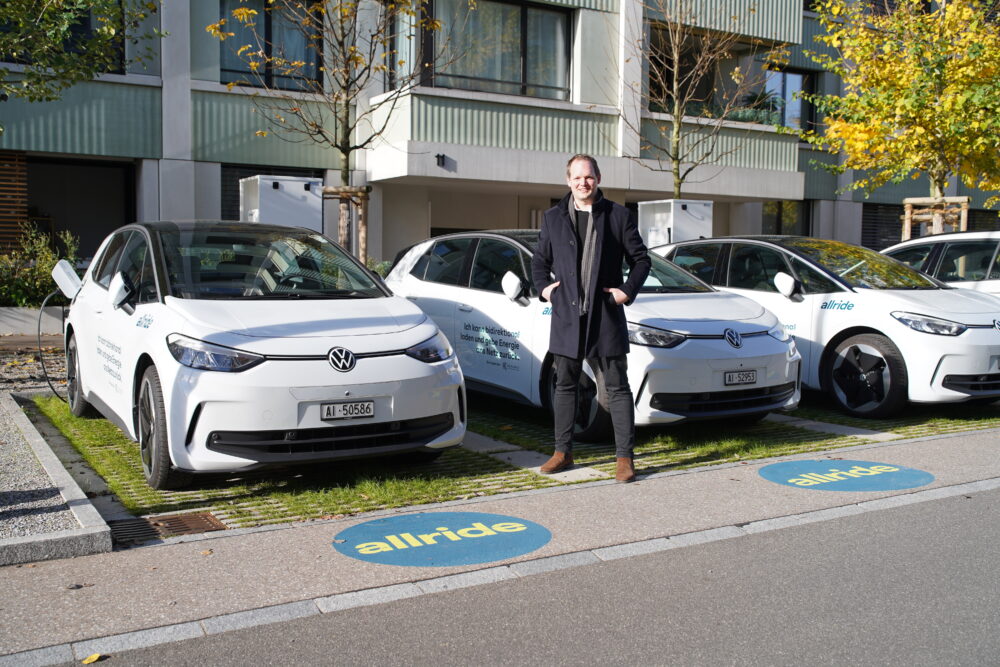
Markus doesn't really have much use for cars. Markus lives with his girlfriend in the middle of the city, has a public transport season ticket and finds it rather pointless to own a car that mostly sits around and costs insurance, motor vehicle tax and parking space rental as well as losing value. Markus rarely needs transport capacity. And if he does? Markus is convinced that a car-sharing solution is the obvious choice for urban commuters. Now he can use a car when and only when he needs it. The most important advantages of such a solution, as offered by Mobility, are the flexibility of the vehicle type, cost transparency and uncomplicated logistics. Markus is therefore very happy with it, as he only needs a car sporadically, but when he does, he can count on quick availability and doesn't have to deal with high monthly fees and long-term obligations. What Markus also doesn't like, however, is that it's not his car, so he has to take even small items such as his cell phone charging cable in and out of the car again and again.
Very individual decision
Ultimately, which form of vehicle procurement is best for whom always depends on the specific situation. There is a suitable solution for Silvana and Hansueli as well as for Pia and Kurt and Tabea and Markus. That leaves the question of the type of drive. The preferred vehicle categories already seem to point the way. For large limousines and sports cars, combustion engines and buying or leasing are likely to remain in the foreground for quite some time, while in the area of mid-range models and small cars, where the focus is on practical use and economical operation, plug-in cars should soon gain a significant share - also because they can be tested virtually risk-free via subscription or sharing solutions.